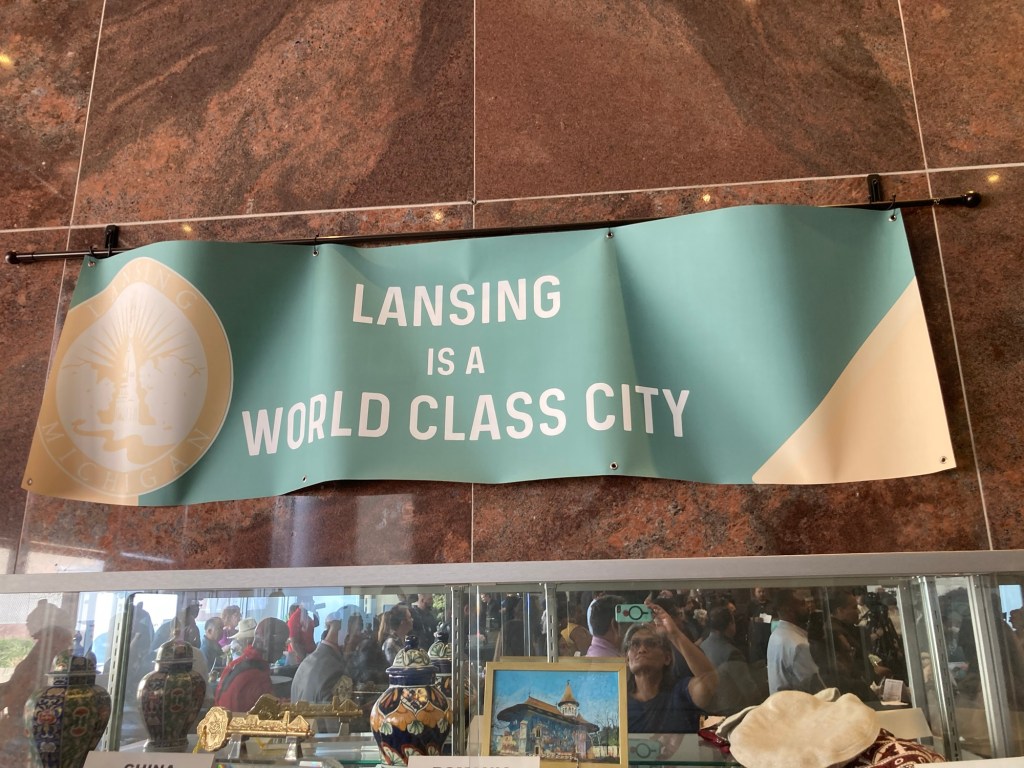
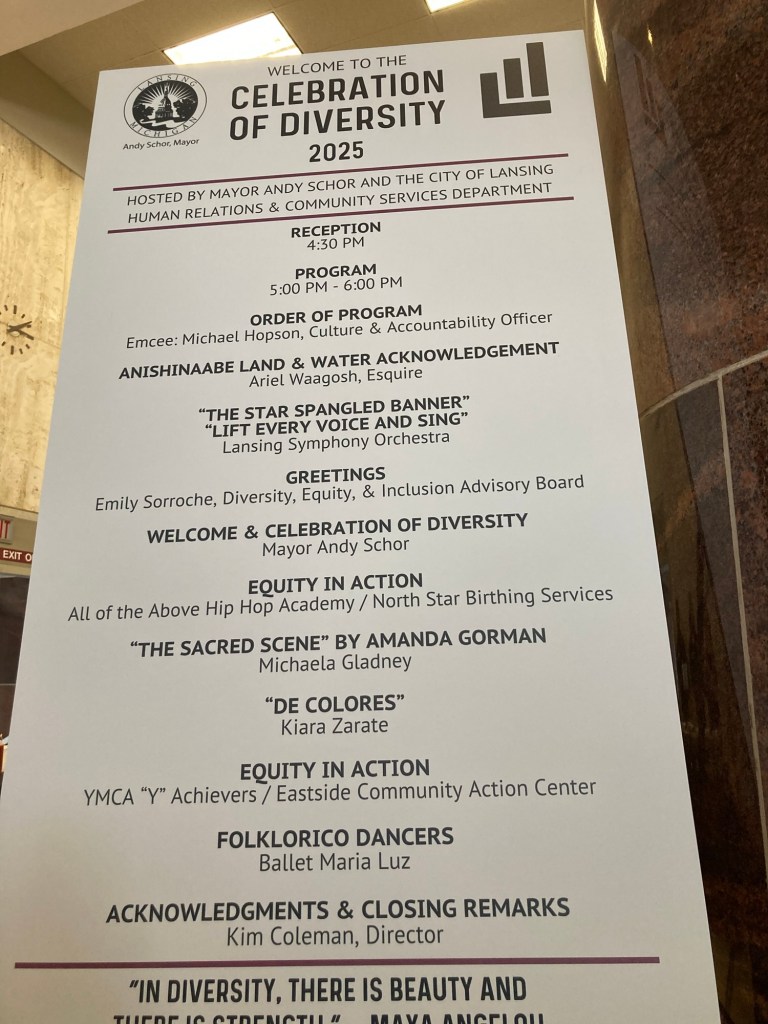
Thrilled to attend the ceremony held inside City Hall !
This was a celebration of Lansing’s commitment to diversity and included a flag ceremony, the mayor’s remarks, and music, singing, dancing, poetry, and a delightful selection of food.
Here’s an auto-generated list of ideas on how we can get more involved in our community.
🗣️ Start by understanding your community’s needs.
Talk to neighbors, attend local meetings, or volunteer with existing organizations to see what challenges people face – whether that’s food insecurity, lack of youth programs, environmental issues, or social isolation among seniors.
Many people in our community are struggling with basic needs. To share your needs or to adopt a neighbor, reach out on any of the local neighborhood groups, such as on Facebook, to find out how you can get involved.
🤝 Consider direct service opportunities.
Volunteer at food banks, tutor students, help with community gardens, or organize neighborhood cleanups. These create immediate positive impact while connecting you with like-minded people.
The Lansing TARDIS food pantry allows you to drop off pantry goods at any time.
If you’re good with technology, help seniors learn digital skills or assist small businesses with their online presence.
If you enjoy organizing, coordinate community events or start a neighborhood watch program.
If you’re good with youth, volunteer with your local school or youth group.
There are so many different places to use your skills! Find one, and try it out, and if it doesn’t work, move on.
🏪 Support local businesses and initiatives.
Shopping locally, attending community events, and promoting local causes on social media all help strengthen the economic and social fabric of your area. You can find local business associations through:
Sometimes communities need more social cohesion: consider
organizing a neighbor day
organizing a neighborhood swap meet or block party
starting or joining a community book club
creating or joining your neighborhood social media group
creating a garage sale for your block
or simply making an effort to know your next-door neighbors better.
🔧 Create practical neighbor-to-neighbor support systems.
Why do we need to be so individuated? We benefit when we can share and reciprocate.
Organize tool-sharing where neighbors borrow equipment instead of everyone buying their own.
Start a neighborhood childcare co-op where parents take turns watching each other’s kids.
Coordinate meal trains for families going through difficult times, new parents, or elderly neighbors who might need extra support.
🎯 Facilitate skill and resource sharing among neighbors.
Create opportunities for neighbors to teach each other
Consider doing “swaps” where someone can offer guitar lessons in exchange for help with home repairs, or organize regular “skill sweeps” where people share knowledge about gardening, cooking, car maintenance, or crafts.
📢 Develop neighborhood communication networks.
Facilitate social media groups
Create neighborhood newsletters, bulletin boards, or regular coffee meetups where people can share information about local issues, upcoming events, or simply get to know each other better.
For example, the Westside, where we live, has a physical community board by the edge of Riddle park, as well as the Letts Community Center board.
🌱 Organize collaborative neighborhood projects.
Work together on shared spaces like community gardens, little free libraries, or beautification projects.
Coordinate group purchases for things like snow removal services or bulk buying of supplies.
These projects can help build intra-neighborhood relationships while improving our shared environment.
It doesn’t cost a lot to say hello to your neighbor, and it’s beneficial when you check in on them and they check in on you.
👥 Foster intergenerational connections.
Many neighborhoods have both young families and older residents who benefit from knowing each other.
Organize events that bring different age groups together, or facilitate informal mentoring relationships where seniors share life experience and younger neighbors help with technology or physical tasks.
🚨 Address neighborhood challenges collectively.
Work with neighbors to tackle shared concerns like traffic safety, parking issues, or crime prevention.
Sometimes problems that seem individual are actually community-wide and benefit from coordinated responses.
The shared “islands” in the Westside are a joint combined responsibility, where neighbors pitch in to keep the lawns beautified.
🏫 Get involved with local schools.
The local Lansing schools are an excellent place to get involved, and all local schools can benefit from your volunteer support.
Read to elementary students, help with after-school programs, or assist with school events and fundraisers.
Join the PTA or school board even if you don’t have children – schools benefit from diverse community input.
Offer professional skills like accounting, marketing, or trades knowledge to help with school projects.
Many schools also need volunteers for field trips, tutoring programs, or mentoring students – you must pass screenings and checks.
Help organize career days where community members share their professional experiences with students.
Alternatively, be a friend or mentor to a young person. Our young people are our future and deserve support and care.
📚 Support educational initiatives beyond the classroom.
Work with schools to create community learning opportunities like science fairs, art shows, or cultural events that bring families together.
Help establish partnerships between local businesses and schools for internships or job shadowing programs.
Advocate for educational resources and funding at school board meetings or through local government channels.
🏛️ Engage with local government.
Attend city council meetings, join local boards or committees, or advocate for issues you care about.
Communities benefit from more citizen involvement in decision-making processes.